
Installation / Process & requirements
What a heat pump water heater installation actually involves
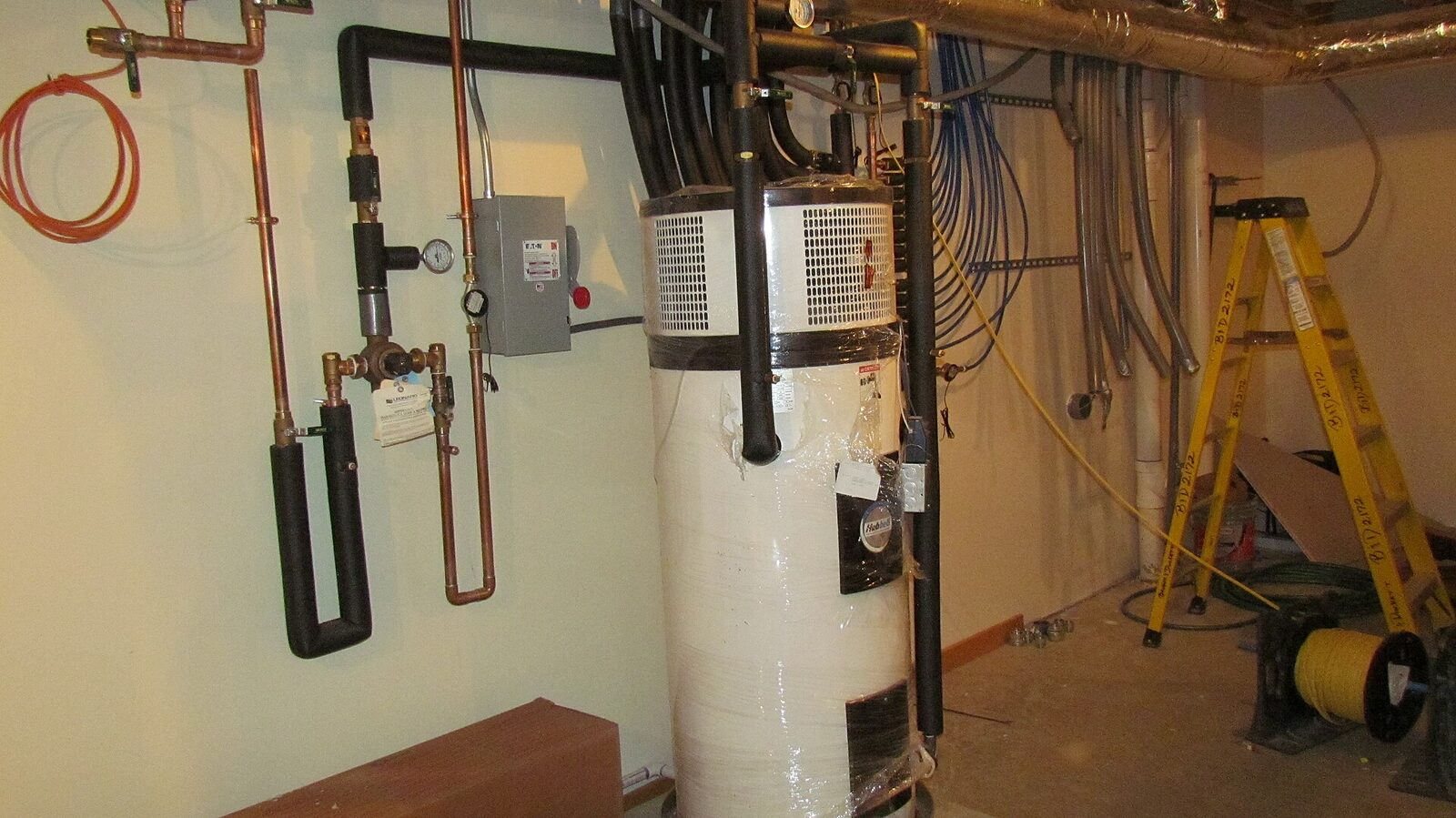
A good installation is decided before any equipment arrives — by evaluating the space, the electrical service and drainage against the chosen model’s installation manual.
01Evaluation
Site suitability
- Clearances
- Each manual specifies minimum clearances on the sides and above the unit for airflow and service access.
- Air volume
- DOE cites about 1,000 cubic feet of surrounding air as a general guide. Some models permit smaller rooms with louvered doors or ducting.
- Ambient temperature
- DOE describes suitable spaces as roughly 40–90°F. Outside the model’s range, it relies on its resistance elements.
- Height & floor
- Hybrid units are often taller than conventional tanks; the floor must be level and support a full tank.
02Specification
Sizing, electrical and condensate
Sizing
Match first-hour rating to your household’s busiest hour. Heat pump recovery is slower than gas, so homes often size up. How sizing works.
Electrical
Many hybrids use a dedicated 240V circuit; some 120V models exist. Panel capacity, distance and the model’s specification determine the work. More on 240V.
Condensate management
Condensate drains to a floor drain or suitable line, or via a condensate pump, per the manual and local code.
Plumbing
Connections may sit in different positions than your old tank. Installers also address the temperature and pressure relief valve discharge, shut-offs, and any expansion tank or mixing valve requirements.
Permits and code
Water heater replacement, new circuits and gas work may require permits depending on your jurisdiction. Your installer should know local requirements.
03Sequence
From visit to commissioning
- 01
Review existing equipment
Fuel, size, age, venting and nearby plumbing. - 02
Evaluate the location
Clearances, air volume and temperature against the candidate model. - 03
Size the unit
Household demand and first-hour rating. - 04
Plan electrical work
Existing circuit, new circuit, or a 120V option. - 05
Plan condensate
Gravity drain or condensate pump. - 06
Select equipment
A model whose requirements fit the space. - 07
Remove the old heater
Including gas capping and vent evaluation where converting. - 08
Install and commission
Fill, purge air, power up, verify heat pump operation and drainage. - 09
Walk through operation
Modes, filter cleaning and what to expect.
04Living with it
Operating modes
- Heat pump / efficiency
- Uses only the heat pump. Most efficient; slowest recovery.
- Hybrid / energy saver
- Heat pump first, elements assist under demand. A common default.
- Electric / high demand
- Behaves more like a standard electric tank; faster recovery, more energy.
- Vacation
- Holds a low temperature while you’re away.
Mode names and behavior vary by manufacturer.
Sources & further reading
By Cincy Heat Pump Water Heaters Editorial Team · Sources last reviewed October 2026
Installation estimate
Ready for a price on your home?
Share a few details about your home and current water heater. We’ll follow up with a free, no-obligation installation estimate.
Installation services are performed by independent service providers. Contractor availability varies by location.